Scan for Path Traversal and Local File Inclusion

Enter a page on a hostname verified in your Scan.now account. Scan.now discovers path-like parameters in same-origin links and public GET forms, then reports only a recognised local-file signature returned by the server.

Verified ownership is required. A normal page URL works when it exposes file or download inputs; an exact parameterized endpoint remains optional.

A registered account is required to run this test. Finding status, evidence, affected locations and remediation are Premium-only. How active scanning works · Acceptable use

How path traversal escapes an intended file area

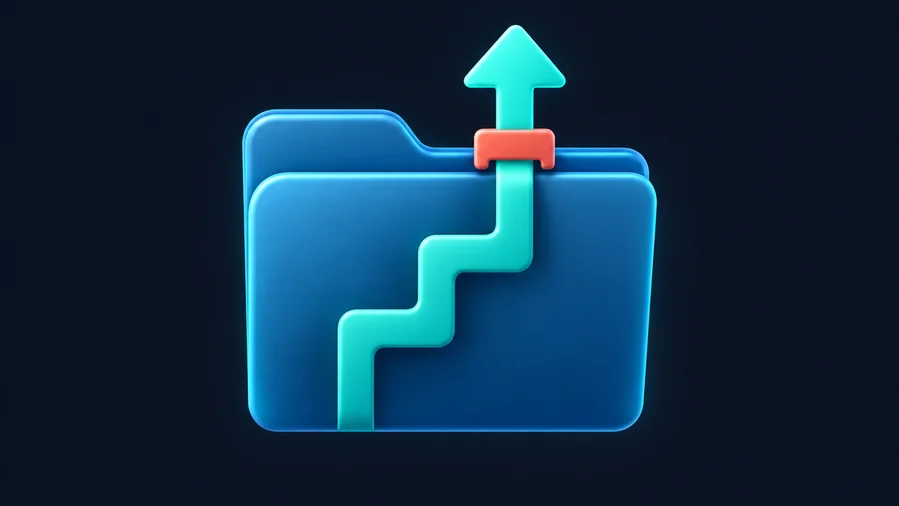
Download, template, image and document endpoints often turn a request value into a filesystem path. If the application joins that value to a directory without enforcing the final resolved location, parent-directory segments can escape the intended area and expose local files.

Because this check asks a server to resolve path-like input, Scan.now runs it only for an exact hostname verified in the account. A normal page URL is enough: the scanner discovers same-origin parameterised links and public GET forms, then tests recognised path inputs with bounded Linux and Windows traversal forms. A failure is recorded only when the response contains a known operating-system file signature; generic errors, status changes and echoed input do not count.
File-path inputs and local-file evidence

The check is deliberately bounded to the signals below.

Coverage areaWhat the scanner examines
Automatic path-input discoverySame-origin links and public GET forms are inspected for file, path, template, include, document, folder and download-style names.
Two platform familiesBounded traversal forms cover common Unix-like and Windows path handling without enumerating application files.
Content-confirmed evidenceA known local-file signature must be returned. A 200 response or an error message alone is not reported as traversal.

Local-file proof and bounded outcomes

A scan result is evidence with a boundary, not a guarantee about every route.

Local-file signature returned

Treat this as a critical containment failure. Preserve logs, restrict the endpoint and review what the application account can read.

No signature returned

The tested path-like parameters did not return the two known system-file signatures. Other encodings, operating systems and file APIs remain possible.

Ownership required

The scan will not send traversal probes until the exact hostname has a completed verification record in your account.

Canonical paths and enforced file boundaries

Use the recommendations below to address confirmed findings and strengthen the surrounding control.

  1. Use indirect file identifiers

    Map an opaque document ID to a server-side record instead of accepting a path from the request.

  2. Resolve and enforce containment

    Canonicalise the final path, then verify it remains beneath the one permitted root before opening it.

  3. Reject absolute and special paths

    Block absolute paths, drive letters, device names, NUL characters and parent segments before filesystem access.

  4. Run with least privilege

    The web process should not be able to read secrets, source repositories, private keys or unrelated customer files.

  5. Separate uploads from executable content

    Store user files outside the web root under generated names and serve them through a controlled download handler.

How it works

  1. Verify the hostname

    Add the exact site to your account and complete ownership verification before any path probe is allowed.

  2. Enter the relevant verified page

    A normal page URL works when it links to or displays the file-handling input. An exact endpoint remains optional when the feature is elsewhere.

  3. We require file-content proof

    A finding is created only when a fixed probe returns a recognised local operating-system file signature.

What this tool checks

1 checks across 1 areas. Each links to its reference page with the test, the risk and the fix.

Full reference

Exposed files and information disclosure

1 check

The ones that most often decide the grade:

Guides for this tool

Background reading written to go with these results.

Frequently asked questions

Why does this scanner require verified ownership?

Even a bounded path probe asks the application to access a local resource. Proof of control prevents this capability from being used casually against third-party sites.

Does blocking ../ fix path traversal?

Not reliably. Encodings, alternate separators and canonicalisation can recreate parent traversal after an early string check. Resolve the final path and enforce that it remains under the permitted root.

Why are generic error messages not treated as proof?

A rejected path, missing file or application error says nothing about whether filesystem boundaries were crossed. Scan.now requires a recognised file signature in the response.

Can object-storage keys have the same problem?

Yes. Although there is no operating-system directory, trusting a supplied object key can cross tenant or prefix boundaries. Use indirect identifiers and enforce ownership at the record layer.