
Scan a Web Page for Reflected XSS Vulnerabilities

Enter a public page. Scan.now discovers its same-origin parameterized links and public GET forms, substitutes a unique inert marker into each input, and checks whether it becomes script markup in the returned HTML.

You can enter a normal page URL. Scan.now discovers public GET inputs on that page; if you already know the endpoint, you can paste its full parameterized URL. POST forms are never submitted.

A registered account is required to run this test. Finding status, evidence, affected locations and remediation are Premium-only. How active scanning works · Acceptable use

What a reflected XSS scan is looking for

Reflected cross-site scripting happens when a value from the request is copied into the returned HTML in a context where the browser treats it as markup or code. Search terms, filter values, error messages and redirect notices are common reflection points. Reflection alone is not enough: safely encoded text is expected and is not a vulnerability.

You can enter a normal page URL. Scan.now discovers same-origin links with query parameters and public GET forms on that page, then changes one discovered input at a time to a unique, inert script element and parses the returned HTML. A failure is recorded only when that exact marker becomes a script element in the response. The marker contains no executable JavaScript, the scanner does not submit forms, and it does not try to read cookies or user data.
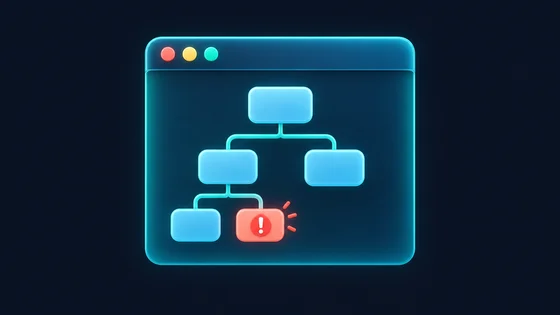

Reflected inputs and HTML evidence

The check is deliberately bounded to the signals below.

Coverage areaWhat the scanner examines
Automatic GET input discoverySame-origin parameterised links and public GET forms on the entered page supply bounded targets. You can also paste an exact endpoint when it is not linked from that page.
HTML parsing, not text searchA marker appearing as encoded text is safe for this check. It must be parsed as a script element before the result is confirmed.
Server-reflected outputThis check covers markup returned by the server. Client-side source-to-sink candidates belong to the separate DOM XSS scanner.

Confirmed, clear and untested outcomes

A scan result is evidence with a boundary, not a guarantee about every route.

Confirmed

The unique marker became a script element in the returned document. Treat the affected output context as a high-priority injection flaw.

No indicator

None of the tested parameters produced executable script markup. This is useful evidence for those exact URLs, not proof about every route or stored input.

No inputs discovered

The entered page exposed no suitable public GET form or parameterised link. Paste a known endpoint if it is not linked there, or scan the page where the input is visible.

Output encoding and safer rendering

Use the recommendations below to address confirmed findings and strengthen the surrounding control.

  1. Encode for the output context

    Use HTML, attribute, URL or JavaScript-string encoding appropriate to where the value is inserted; one encoder does not fit every context.

  2. Keep auto-escaping enabled

    Render untrusted values through the framework's normal escaped template syntax and review every raw-HTML escape hatch.

  3. Remove dangerous insertion APIs

    Prefer textContent and safe DOM construction over innerHTML, document.write or string-built event handlers.

  4. Add a restrictive CSP

    A nonce- or hash-based Content-Security-Policy reduces impact, but it is a backstop rather than a substitute for correct output handling.

  5. Turn the URL into a regression test

    Keep the vulnerable parameter and context in an automated test so the same template mistake cannot return unnoticed.

How it works

  1. Enter a relevant public page

    A normal page URL works. An exact parameterised endpoint is optional when the input is not linked or shown in a GET form on that page.

  2. We discover and isolate each input

    Public GET forms and same-origin parameterised links are collected, then a unique inert script marker replaces one value at a time.

  3. Review the private evidence

    Premium shows the affected parameter and path, plus remediation guidance; no executable payload is run.

What this tool checks

1 checks across 1 areas. Each links to its reference page with the test, the risk and the fix.

Full reference

Page content and JavaScript

1 check

The ones that most often decide the grade:

Guides for this tool

Background reading written to go with these results.

Frequently asked questions

Does this scanner execute JavaScript in my visitors' browsers?

No. The probe is an inert script element with a unique data marker and no JavaScript body. Scan.now parses the response on its own server; it does not send the probe to another visitor.

Do I need to add a query string to the URL?

No. The scanner discovers public GET forms and same-origin parameterised links on the page you enter. Pasting the exact endpoint is optional and useful only when the input is not visible from that page. Use the DOM XSS scanner for a separate review of client-side sources and sinks.

Is seeing my search term on the page an XSS vulnerability?

No. Applications normally repeat search and filter values. It becomes dangerous only when the value reaches an executable HTML or script context without the encoding required for that context.

Can a Content-Security-Policy make the finding safe?

A strong CSP can block many injected scripts and is valuable defence in depth, but browser support, allowed script sources and policy mistakes leave gaps. Fix the unsafe output handling as the primary control.